It can feel confusing: you finish a meal, you’re physically full, and yet—almost immediately—you start wanting something sweet.
If you’ve been asking why do I crave sugar after eating, this pattern is more common than many women realize, especially after 40. It’s not simply about habit or lack of control. In most cases, it reflects how your body is responding to blood sugar changes, hormonal signals, and even digestion.
Post-meal cravings are often a sign that something in the metabolic process is not fully balanced. Understanding these signals can help you interpret what your body is actually trying to communicate.
Why do I crave sugar after eating?
Craving sugar after eating is often linked to rapid changes in blood glucose and insulin levels. When a meal causes a quick spike and drop in blood sugar, the body may signal for more sugar to restore balance, even if you are not physically hungry.
What happens to blood sugar after a meal
After eating, your body breaks down food into glucose, which enters the bloodstream. In response, insulin is released to help move glucose into cells.
Ideally, this process is stable. But when it’s not, fluctuations can occur.
Two common responses
- Stable response → steady energy, no cravings
- Unstable response → spike followed by drop, triggering cravings
When blood sugar drops too quickly after a meal, the brain perceives this as a need for more energy—even if your body has already consumed enough food.
These fluctuations are not always noticeable—but they influence appetite later.
This is why maintaining stable glucose levels throughout the day becomes essential, as explained in how to stabilize blood sugar naturally, where daily habits directly influence post-meal cravings.
The role of insulin in post-meal cravings
Insulin plays a central role in what happens after eating.
If insulin rises too quickly or in excess, it can lower blood sugar faster than needed. This creates a temporary imbalance.
The result:
- A sense of “something is missing”
- Desire for quick energy
- Craving for sugar or refined carbohydrates
This is why cravings often appear shortly after eating, rather than hours later.
Why sugar cravings can happen even when you feel full
One of the most confusing aspects of this pattern is that cravings appear despite fullness.
This happens because:
- Hunger and cravings are regulated by different systems
- The brain responds to glucose availability, not just stomach fullness
- Rapid metabolic shifts override satiety signals
In other words, your body may feel full—but your brain is still signaling for energy.
Hormonal changes after 40
As women move through perimenopause and menopause, metabolic responses can shift.
Key changes that affect cravings
- Reduced insulin sensitivity → glucose regulation becomes less efficient
- Estrogen fluctuations → affect appetite and metabolic balance
- Cortisol patterns → increase desire for quick energy sources
These changes can make post-meal sugar cravings more frequent and more noticeable.
This pattern often becomes more noticeable later in the day, as explored in why do I crave sugar at night female, where hormonal and metabolic shifts further intensify cravings.
The connection with digestion
Digestion also plays a role in how your body responds to food.
If digestion is:
- too fast → glucose enters the bloodstream quickly
- inefficient → nutrient absorption may be altered
This can contribute to unstable blood sugar responses.
Factors that influence digestion
- Eating too quickly
- Low fiber intake
- Imbalanced meals
- Gut health imbalances
A meal that lacks balance can lead to a faster rise and fall in glucose.
Common meal patterns that trigger sugar cravings
Certain types of meals are more likely to lead to post-meal cravings.
Higher risk meals
- High refined carbohydrates (white bread, pasta, sweets)
- Low protein meals
- Low fat meals
- Meals lacking fiber
These patterns are closely related to broader carbohydrate cravings discussed in why do I crave carbs at night, where the body seeks quick sources of energy and regulation.
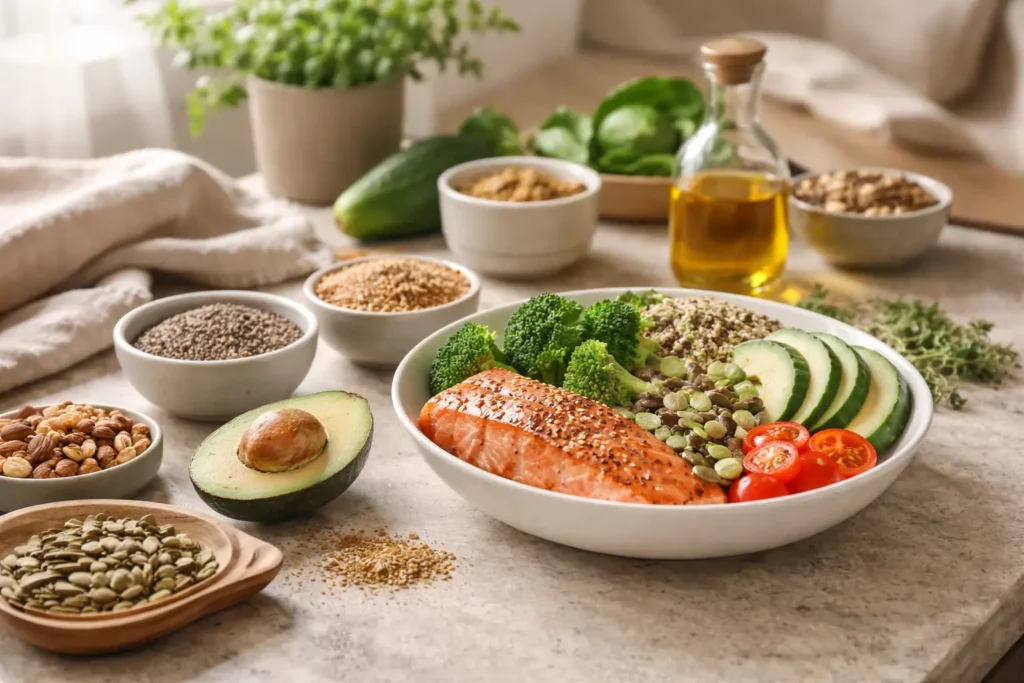
More stabilizing meals
- Balanced macronutrients (protein, fat, carbs)
- Whole foods
- Fiber-rich ingredients
The composition of the meal matters as much as the quantity.
The nervous system connection
Cravings are not purely metabolic—they are also linked to the nervous system.
After eating, the body begins shifting toward a more relaxed state. If this transition is incomplete, the brain may look for additional signals to promote calmness.
Sugar can provide:
- Quick reward
- Temporary relaxation
- A shift in mental state
This is why cravings sometimes feel emotional—even when they are rooted in physiology.
Why this pattern can become repetitive
When sugar cravings repeatedly follow meals, the brain starts to recognize a pattern.
Over time:
- Eating → becomes associated with sugar
- Meals → trigger expectation of something sweet
- The loop → becomes automatic
This is not just biological—it becomes behavioral as well.
Functional nutrition perspective
From a functional perspective, sugar cravings after eating are signals—not problems.
They often indicate:
- Blood sugar instability
- Nutrient imbalance
- Hormonal shifts
Key nutritional strategies
- Include protein in every meal
- Add healthy fats for slower digestion
- Increase fiber intake
- Avoid highly refined carbohydrates
Stabilizing glucose throughout the day reduces post-meal cravings.
Nutrients that may support balance
Some nutrients help regulate blood sugar and reduce cravings over time:
- Magnesium → supports insulin function and relaxation
- Chromium → helps regulate glucose metabolism
- Protein intake → stabilizes energy levels
These support long-term balance rather than immediate suppression of cravings.
Lifestyle factors that influence post-meal cravings
Beyond food, daily habits play a role.
Key influences
- Sleep quality plays a major role, as explained in how sleep affects cravings, since poor sleep directly impacts glucose regulation and increases cravings.
- Stress levels
- Meal timing
- Physical activity
Chronic stress and poor sleep can amplify cravings by affecting cortisol and glucose regulation.
When to pay attention to sugar cravings
Occasional cravings are normal. But frequent or intense cravings after meals may indicate imbalance.
Signs to observe:
- Cravings after most meals
- Energy crashes after eating
- Strong desire for sweets specifically
These patterns can provide insight into how your body is responding to food.
Final thoughts
Understanding why do I crave sugar after eating helps shift the perspective from frustration to awareness.
This pattern is not about lack of control. It is often a reflection of how your body is managing blood sugar, hormones, and energy.
When you begin to see cravings as signals rather than problems, you can respond with more clarity and less resistance.
Frequently Asked Questions
Why do I crave sugar right after eating?
Because of rapid changes in blood sugar and insulin levels after a meal.
Is it normal to want dessert after every meal?
It can be common, but frequent cravings may indicate blood sugar imbalance.
Do hormones affect sugar cravings after eating?
Yes. Hormonal changes, especially after 40, can influence glucose regulation and cravings.
How can I reduce sugar cravings after meals?
Balancing meals with protein, fat, and fiber can help stabilize blood sugar and reduce cravings.